
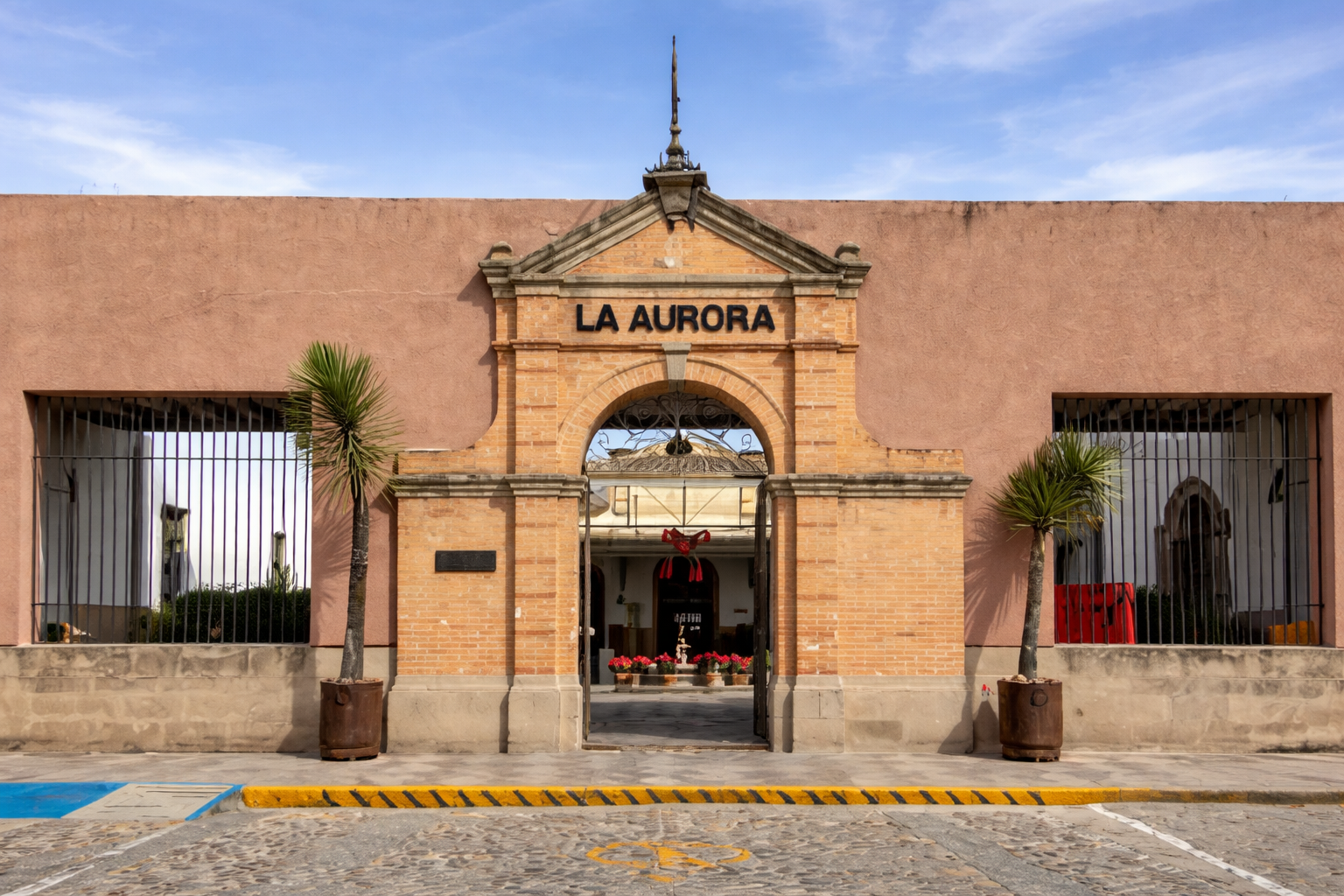
Today, La Aurora is synonymous with art, design, and creative life. However, its history began far from the galleries, workshops, and cafes that define it today. Before becoming one of the most important cultural spaces in San Miguel de Allende, it was a textile factory: a place of work, production, and daily effort.
Understanding La Aurora means understanding one of the city's most representative transformations: how the industrial past could be resignified without disappearing, becoming an active part of the current identity.
An industrial past
Founded in the early 20th century, Fábrica La Aurora emerged at a time when San Miguel de Allende was not yet the international cultural and artistic destination we know today. At that time, the city had a more local economy, linked to regional trade and artisanal and industrial production.
For decades, La Aurora was a fundamental source of employment for hundreds of San Miguel families. The sound of looms, the constant movement, and the discipline of industrial work were part of the city's daily landscape. It was not a place for visiting, but for routine, effort, and subsistence.
Over time, as happened with many textile factories in the country, La Aurora went into decline. Production ceased, spaces emptied, and the complex fell silent. However, that silence was not total abandonment: it was a pause loaded with memory, solid structures, and latent potential.
The space waiting for a new language
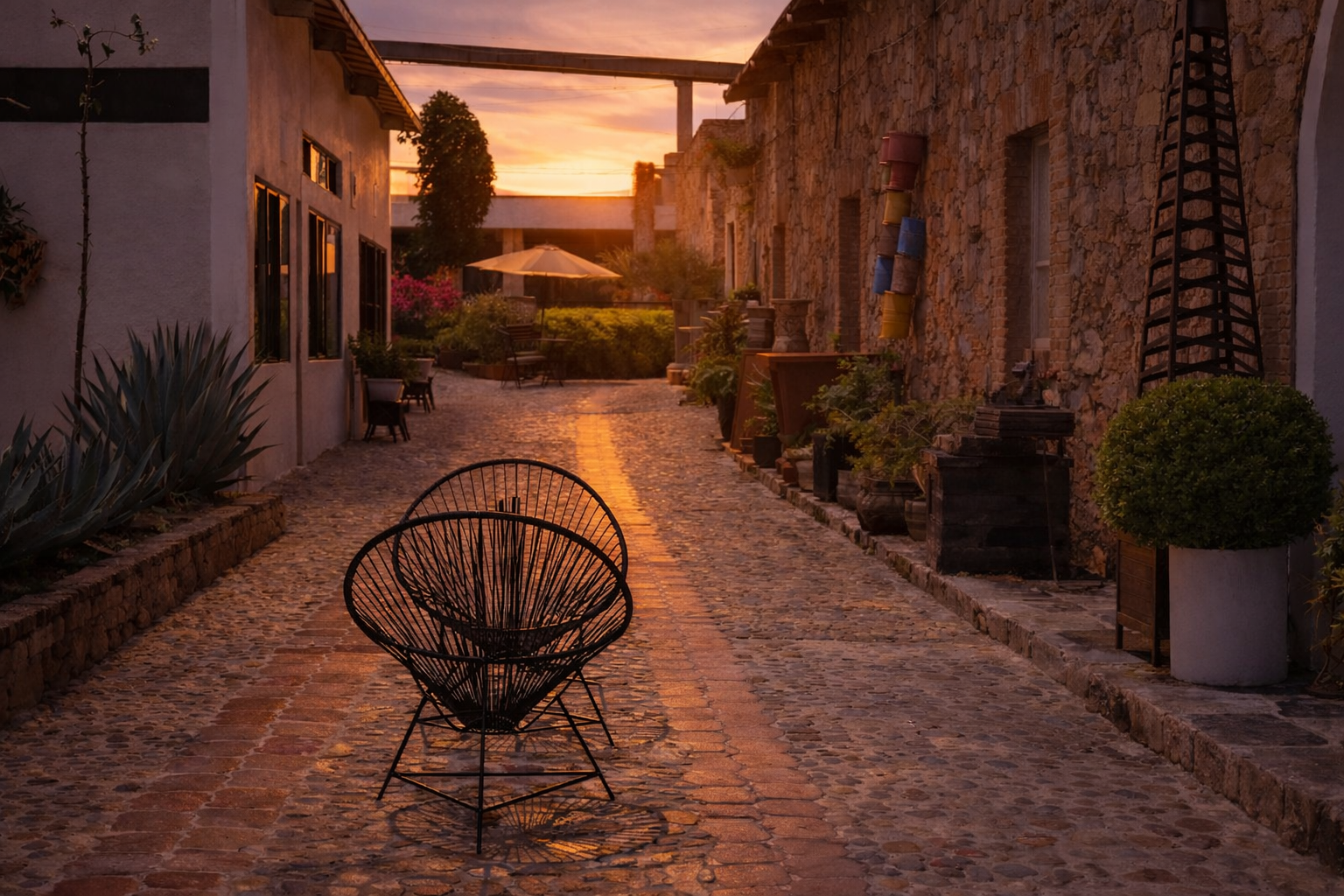
The wide naves, robust walls, high windows, and natural light passing through the complex created, unintentionally, an ideal setting for something different. For years, La Aurora remained as a physical reminder of San Miguel's industrial past, but also as an open question: what to do with such a place without erasing what it was?
The answer was neither immediate nor simple.
The conscious transformation
The conversion of La Aurora did not happen superficially or hastily. It was a careful process of rereading the space, where a fundamental decision was made: not to hide its history, but to allow the new use to dialogue with it.
Instead of demolishing or covering up, original structures were respected. Art did not replace the industrial past; it leaned on it. The traces of work, the scale of the place, and its materiality became part of the aesthetic language of the new project.
Today, La Aurora houses:
- Contemporary art galleries.
- Workshops for artists and creators.
- Design studios and production spaces.
- Cafes and meeting areas.
It does not function as a shopping mall or a traditional museum. It is a living creative ecosystem, where work is not only exhibited but produced in front of the visitor.
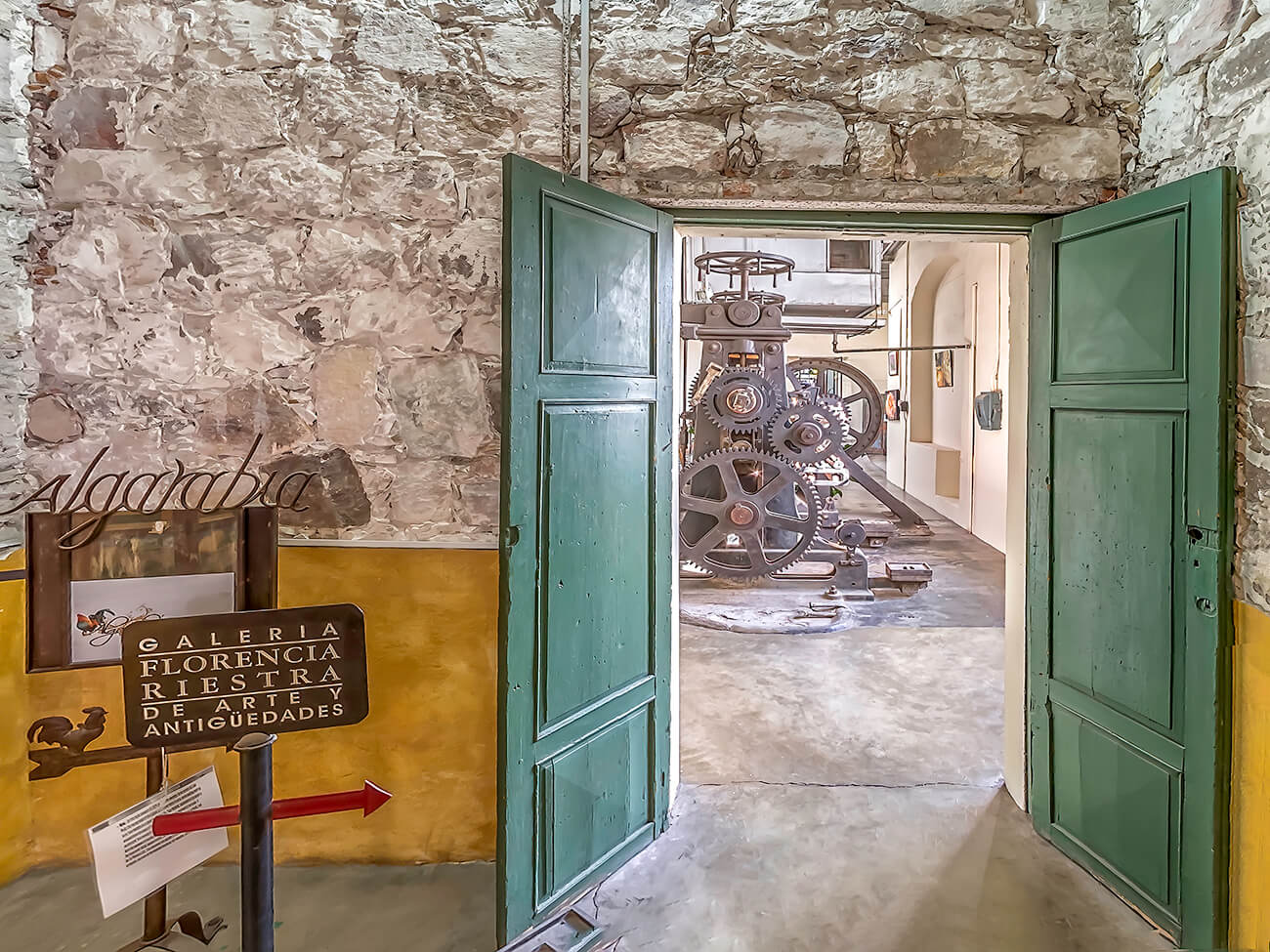
Photo: “Fábrica La Aurora (San Miguel de Allende)” — Mi México 360 — CC BY 4.0 — https://www.mimexico360.com/san-miguel-de-allende/fabrica-la-aurora-en-san-miguel-de-allende/ — License: https://creativecommons.org/licenses/by/4.0/
A place to inhabit, not consume
One of La Aurora's most valuable traits is that it does not impose an experience. You can wander without haste, enter a gallery, watch an artist at work, sit and talk, or simply walk. Each visit is different because the place is constantly transforming.
For those living in San Miguel, La Aurora is not an occasional destination. It is part of the city's daily pulse: a space where art ceases to be an event and becomes a constant presence.
What it represents today
La Aurora symbolizes one of San Miguel de Allende's deepest values: the ability to resignify the past without erasing it.
It is proof that the city does not live anchored in nostalgia or trapped in its historical image. San Miguel evolves with criteria, integrating memory, creativity, and community in an uncommon balance.
La Aurora explains not only the city's artistic present; it explains its character. A character that understands that identity is not preserved by freezing it, but by allowing it to transform meaningfully.
And perhaps that is why, for many people who decide to live here, La Aurora is not just a place to visit. It is a silent confirmation that San Miguel chose art—and creative life—as one of its fundamental languages.